• About Us
  • Our Team
    • Board Members
    • Staff & Consultants
  • Programs
  • Consulting Services
  • Ask The Experts
  • Submit Articles
  • Menterprise Marketplace
  • Contact Us
  • Our Partners
Menterprise Africa
DONATE
  • Stories
    • News
    • Features
    • Analysis
    • Innovators’ Insights
  • Opportunities
  • Multimedia Hub
    • Podcasts
    • Videos
    • Webinars
    • Menterprise Talks
    • Photo Galleries
  • Knowledge Hub
    • Trainings
    • Guides
    • Tip Sheets
  • Personal Finance
  • Partnerships
    • ECD Series
    • Menterprise Festivals
No Result
View All Result
  • Stories
    • News
    • Features
    • Analysis
    • Innovators’ Insights
  • Opportunities
  • Multimedia Hub
    • Podcasts
    • Videos
    • Webinars
    • Menterprise Talks
    • Photo Galleries
  • Knowledge Hub
    • Trainings
    • Guides
    • Tip Sheets
  • Personal Finance
  • Partnerships
    • ECD Series
    • Menterprise Festivals
DONATE
No Result
View All Result
Menterprise Africa
No Result
View All Result

Nairobi to Addis: Proving the Possibilities for E-Mobility in Eastern Africa

Dubbed the “Road to Addis,” this event was more than just an adventurous road trip. It was a bold statement about the region’s capacity for innovation, cooperation, and clean energy transformation.
Freelance Author by Freelance Author
October 21, 2025
in Features, News, Stories
0
Nairobi to Addis: Proving the Possibilities for E-Mobility in Eastern Africa

Charging batteries at Ethiopian Electric Utility station in Dila.

Share on FacebookShare on TwitterShare on WhatsApp

By Pamela Otali

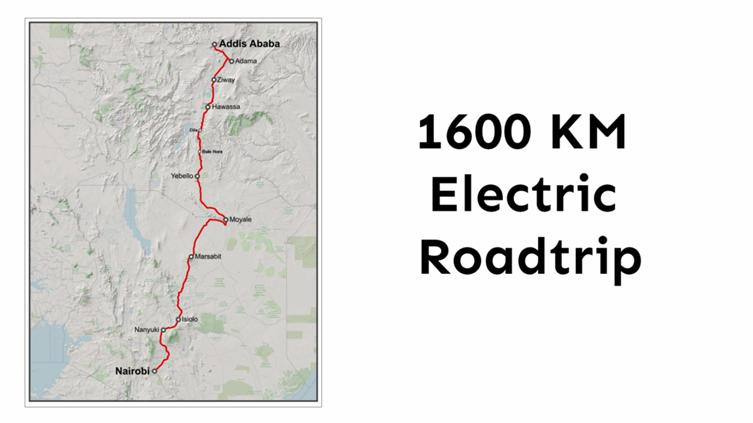
Earlier this October, a convoy of electric vehicles embarked on a groundbreaking 1,600-kilometre 8-day journey from Nairobi to Addis Ababa – the first cross-border e-mobility expedition of its kind in Eastern Africa. Dubbed the “Road to Addis,” this event was more than just an adventurous road trip. It was a bold statement about the region’s capacity for innovation, cooperation, and clean energy transformation.

Related articles

Inside Kenyan Nursing Entrepreneur Ruth Apondi’s Journey to Mobile Health

Greenhouse farming changed his life

The journey, led by Intro Africa in collaboration with Thought Leader Africa and several regional partners, highlighted what can be achieved through purposeful and constructive connections. It demonstrated that electric mobility – once seen as a far-off dream – is becoming a real and viable option for the African continent. The vehicles travelled entirely on electric power, navigating various terrain and logistical hurdles, especially that of limited charging points.

“It’s not the convenience of pulling into a petrol station and refuelling in minutes. It’s running cables, learning which adapters work, and waiting hours for a charge. But that’s the reality of being early in the e-mobility journey, and I embrace these challenges. Because one day, when EVs are everywhere, we’ll look back and see how far we’ve come,” said Paul Kidero from Intro Africa.
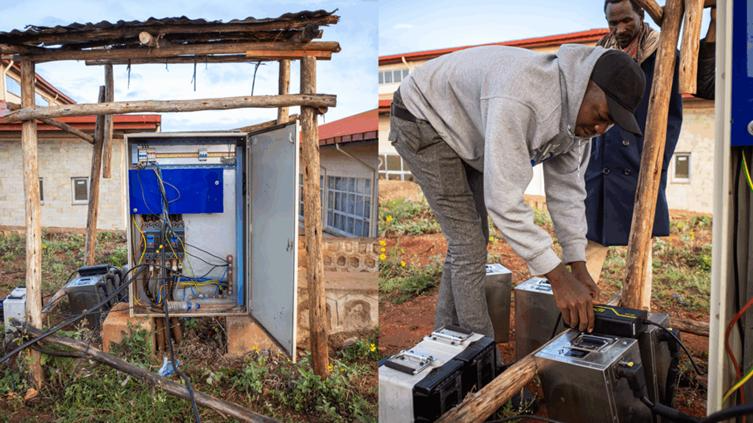
Charging batteries at Ethiopian Electric Utility station in Dila.


This is a reminder that while progress is being made, much more needs to be done to make e-mobility practical on a continental scale.

Across the Eastern Africa Power Pool (EAPP) region, only a few countries, such as Kenya and Ethiopia, have begun establishing national networks of charging stations. Kenya Power, for instance, has announced plans to roll out public charging points along major highways, while Ethiopia recently launched its national e-mobility strategy and banned the importation of fossil-fuel-powered private cars, aiming for 500,000 electric vehicles by 2030.

These national efforts are being supported by a growing number of private investors, such as Munja Group, Eazy Power Plc, SPIRO and Kabisa, who are leading initiatives to establish charging networks and promote affordable mobility solutions. Yet, as the participants of Road to Addis emphasized, no single player can solve this challenge alone. The transition requires a complete ecosystem — governments providing policy support and tax incentives, development partners offering financing and technology transfer, and regional bodies such as EAPP ensuring the grid infrastructure can handle new and growing demands.

For the EAPP, the Road to Addis undertaking highlights both the progress achieved and the work ahead. As our mandate is to facilitate cross-border electricity trade and enhance access to clean, reliable, and affordable energy across the thirteen member countries, E-mobility sits naturally within this vision. By supporting stable interconnections and promoting renewable power generation, EAPP is laying the foundation for a transport system powered by African energy – rather than imported fossil fuels.

As Eng. James Wahogo, Secretary General of EAPP, noted during the event to celebrate the arrival of the fleet in Addis, “This is a challenge to utilities across the region to install the necessary infrastructure and demonstrate that this is possible. And even as we enhance supply, we must build the demand.”
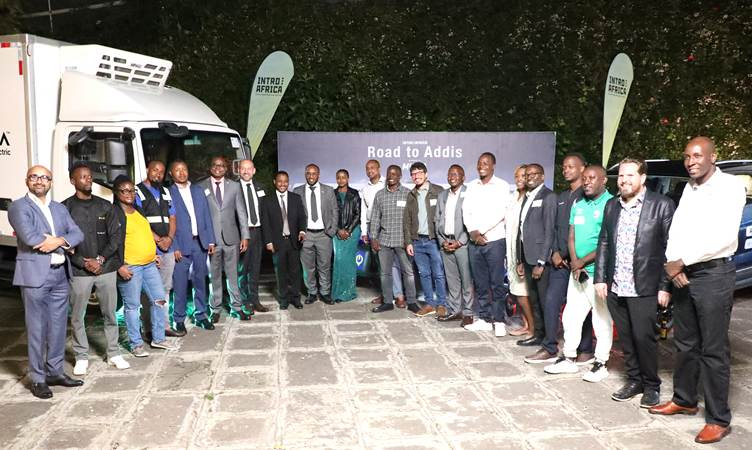
The team that made Road to Addis possible, with dignitaries at the residence of the Norwegian Ambassador to Ethiopia. H.E. Ambassador Stian Christensen hosted a cocktail to celebrate the arrival of the electric fleet.

The broader implications are immense. A functional e-mobility ecosystem powered by renewable energy can help reduce fuel import bills, create new industrial opportunities, improve air quality in urban areas, and contribute significantly to the fight against climate change. Climate change remains one of the most urgent threats to all, and it is therefore worthwhile – even essential – to invest in this transition.

Yet the journey toward clean mobility cannot be limited to urban centres. As one speaker aptly put it, “Within cities, infrastructure is increasing; the real key is interconnecting cities — that’s how people and goods move.” Initiatives such as the Ethiopia-Kenya power interconnection, which recently began wheeling electricity to Tanzania, make it entirely possible to envision a green corridor between Nairobi and Addis Ababa, where transport, energy, and trade converge seamlessly.

The Road to Addis expedition has proven that Eastern Africa has both the potential and the will to drive this transformation. What is needed now is coordination, investment, and commitment. The Eastern Africa Power Pool stands ready to play its part – by supporting harmonized standards, facilitating regional cooperation, and ensuring that the energy powering Africa’s future is clean, reliable, and interconnected.

And when electric transport becomes the norm across Eastern Africa borders, we will look back on this moment as the one that truly set that future in motion.

Read more about the road trip @ https://intro.africa/story/road-to-addis/



Tags: Addis Ababae-mobilityIntro AfricaNairobiThought Leader Africatoptopnewstopstory
Freelance Author

Freelance Author

Related Stories

Inside Kenyan Nursing Entrepreneur Ruth Apondi’s Journey to Mobile Health

Inside Kenyan Nursing Entrepreneur Ruth Apondi’s Journey to Mobile Health

by Macharia Maina
January 24, 2026
0

Twenty-four-year-old Ruth Apondi Omondi’s August 2025 win of the Top 40 Under 40 Women award in the social Impact category from the Kenyan news publication Business...

Greenhouse farming changed his life

Greenhouse farming changed his life

by Akem Olives Nkwain
January 6, 2026
0

In the industrial sprawl of Douala, Cameroon’s economic capital, where concrete has taken over much of the greenery, one man has found a meaningful way to...

Why Africa Will Define the Next Decade of Digital Public Infrastructure

Why Africa Will Define the Next Decade of Digital Public Infrastructure

by Freelance Author
January 7, 2026
0

By Mariam Ibrahim, Mohammed Maikudi, Wakini Njogu The conversation on Digital Public Infrastructure (DPI) is moving fast, and this was clear during the three-day Global DPI...

Opportunities to Apply for in January 2026 — For African Entrepreneurs and Changemakers

Opportunities to Apply for in January 2026 — For African Entrepreneurs and Changemakers

by Arthur Ikotot
January 5, 2026
0

A new year brings renewed opportunity. In 2026, several leading institutions are inviting applications from African entrepreneurs, researchers, creatives, and community leaders. This curated January edition...

Inside Uganda’s Biometric Voter Verification Kit: What Voters Need to Know Ahead of January 15 Election

Inside Uganda’s Biometric Voter Verification Kit: What Voters Need to Know Ahead of January 15 Election

by Esther Oluka
January 6, 2026
0

Since Uganda's Electoral Commission (EC) announced that it would deploy a revamped Biometric Voter Verification Kit (BVVK) system as part of its digital public infrastructure (DPI)...

Next Post
November 2025: Opportunities for African Innovators, Leaders, and Changemakers

November 2025: Opportunities for African Innovators, Leaders, and Changemakers

Fundraising Drive: For every US dollar you donate to Menterprise  Africa this November 2025, the New Africa Fund will match it 1:1

Fundraising Drive: For every US dollar you donate to Menterprise Africa this November 2025, the New Africa Fund will match it 1:1

Africa’s $30 smartphone that envisions leaving no one behind

Africa's $30 smartphone that envisions leaving no one behind

Leave a Reply Cancel reply

Your email address will not be published. Required fields are marked *

Menterprise Africa

Menterprise Africa is a dynamic and forward-thinking multimedia social enterprise with continental ambitions, which began its operations in 2021 and was formally registered by the Uganda Registration Services Bureau (URSB) on 23 January 2024.

© 2026

  • Home
  • About Us
  • Join Us
  • Contact Us
No Result
View All Result
  • Stories
    • News
    • Features
    • Analysis
    • Innovators’ Insights
  • Opportunities
  • Multimedia Hub
    • Podcasts
    • Videos
    • Webinars
    • Menterprise Talks
    • Photo Galleries
  • Knowledge Hub
    • Trainings
    • Guides
    • Tip Sheets
  • Personal Finance
  • Partnerships
    • ECD Series
    • Menterprise Festivals
DONATE

© 2026