By Eric Kyama
In Uganda, a quiet crisis unfolds every morning in homes, markets, farms, and factories. As parents, especially mothers, step out to earn a living, hundreds of young children are left in informal, often unregulated care arrangements. This is not simply a family issue; it is a development challenge that sits at the intersection of gender equality, economic growth, and human capital formation.
Childcare, as defined by early childhood experts, goes beyond supervision. It is the provision of safe, nurturing, and developmentally appropriate care for young children, particularly those aged 0–5 years. It draws on five essential conditions for early childhood development: Protection, responsive caregiving, early learning, health, and nutrition. When these conditions are met, children thrive, and when they are absent, the consequences echo across lifetimes and economies.
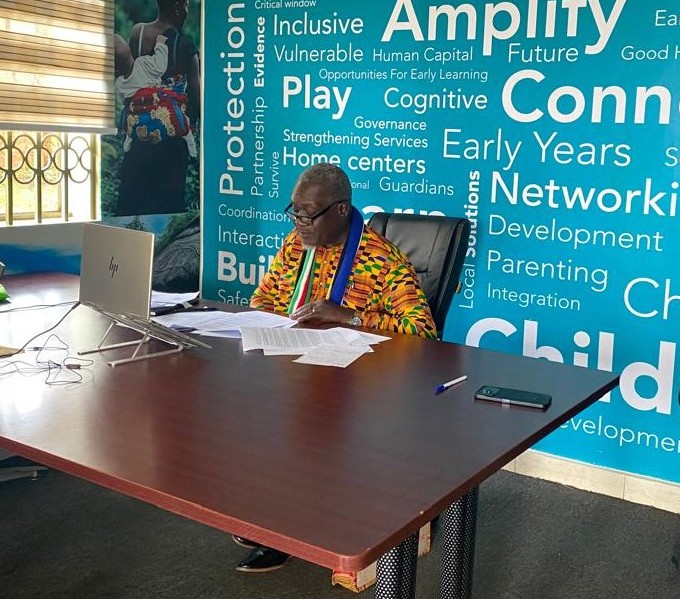
At the National Childcare Webinar 2025, organised on 16 December by the Ministry of Gender, Labour, and Social Development (MoGLSD) and the African Early Childhood Network (AfECN), and produced by Menterprise Africa, childcare experts convened to explore how Uganda can effectively navigate the childcare challenges.
Why childcare matters for Uganda’s development
Uganda’s development ambitions, articulated in the Sustainable Development Goals, the African Union’s Agenda 2063, and Uganda’s National Development Plan IV, cannot be realised without deliberately addressing childcare. According to Given Mwanakatwe Daka, Regional Coordinator at AfECN, childcare lies at the heart of human development, shaping early childhood outcomes while enabling women’s meaningful participation in the workforce.
“Globally, millions of women remain outside the labour force due to childcare responsibilities, limiting household welfare and national productivity. Limited access to quality childcare also exposes children to unsafe and unstimulating environments, undermining early learning and overall well-being. Investing in childcare, therefore, is not only a moral and social imperative, but an economic one as well,” she explains.
Echoing this perspective, the Commissioner for Gender and Women Affairs at the Ministry of Gender, Labour and Social Development, Angella Nakafeero, underscores that investment in appropriate childcare services is a strategic pillar of Uganda’s human capital development agenda, one that advances gender equality while driving inclusive and sustainable economic growth.
“Evidence shows that gaps in childcare provision continue to place a burden on women and constrain children’s development, and affect women’s participation in the workforce. Quality childcare services are essential to children’s development and enable women to actively participate productively in the economic growth of Uganda,” she notes.
Historically, childcare in Uganda has been rooted in the home. Cultural norms and a patriarchal system have long placed caregiving responsibilities on mothers and female relatives, while men are expected to act as providers. As Frances Mary Beaton-Day, Co-Team Lead for the Invest in Childcare initiative at the World Bank, observes, these norms are increasingly misaligned with today’s realities.
“Urbanisation, changing family structures, and rising female labour force participation have created a growing demand for alternative childcare arrangements. Yet access to affordable, organized childcare remains limited, particularly for low-income and rural families. Even where services exist, parents often hesitate to use them due to concerns about safety, quality, and trust,” she says.
Childcare models across Africa
Across Africa, childcare takes many forms: Centre-based facilities, home-based care, community-run centres, workplace childcare, and even market-based models that serve informal traders. Most countries operate a mix of these approaches, with wide variation in government oversight, staff conditions, and affordability.
Formal centre-based care, while often better regulated, is typically too expensive for low-income families. Informal and home-based care, though more accessible, often operates outside regulatory and quality assurance systems. The challenge for African governments is not to replace informal care, but to recognise, support, and improve it.
From policy to practice: Closing the implementation gap
In recent years, many African countries have adopted Early Childhood Development (ECD) or Early Childhood Education (ECE) policies. However, childcare is often subsumed within these frameworks, receiving limited attention to issues such as affordability, workforce development, parental support, and financing. Fragmentation across ministries further weakens coordination and accountability.
Both Beaton-Day and Daka emphasise that bridging the policy-to-practice gap requires a systems approach. This includes developing national childcare strategies with clear service models, regulatory standards, institutional roles, and dedicated budget lines. Without adequate public financing, access and quality will remain out of reach for the families who need childcare most.
Encouragingly, African countries are demonstrating that progress is possible, even in low-resource settings. One practical approach is to integrate childcare into existing community platforms such as health, nutrition, education, agriculture, and public works programs. These “win-win” entry points expand access while supporting broader development goals.
In Uganda, Ms Nakafeero notes that “the Government continues to provide leadership in strengthening the policy, regulatory framework, and institutional framework for childcare. Our focus is on improving the standard of childcare for children below the age of 3, promoting appropriate community and family-based care models, strengthening coordination across sectors and enhancing oversight at both national and local government levels.”
Community-based childcare models in countries such as the Democratic Republic of the Congo, Tanzania, and Burkina Faso have shown positive impacts on women’s incomes, agricultural productivity, household welfare, and child development. These models often rely on local spaces, community-selected caregivers, short but targeted training, and modest public or donor support, proving that quality childcare does not always require expensive infrastructure.
Another promising pathway is childcare entrepreneurship. By integrating childcare as a training and income-generating track within youth and social protection programs, governments can expand services while creating jobs, particularly for young women. However, as Beaton-Day cautions, subsidies or in-kind support are essential to ensure affordability for vulnerable families.
Quality, affordability, and gender equity
Across all models, three principles stand out. First, quality matters. Children must be protected from harm, and caregivers need basic training, manageable ratios, and ongoing support. Second, affordability is non-negotiable.
The Assistant Commissioner for Youth and Children’s Affairs, Mondo Kyateka, notes that when childcare systems are accessible, affordable, safe, and of high quality, they generate strong returns for children, families, employers, and the economy at large.
“Emphasis needs to be placed on key issues such as accessibility, affordability, safety, and quality of childcare services. When these are in place, they enable healthy child development, improve household incomes, and contribute to overall economic growth,” he explains. Kyateka adds that affordability remains the most significant barrier to accessing childcare services.
“Studies show that while households are willing to contribute, they are unable to meet the full cost of quality childcare without public support.”
He further observes that although childcare services exist — and in some cases remain underutilised — persistent demand-side barriers, particularly affordability, continue to limit uptake in many parts of the world, especially in Uganda. Uneven regulatory oversight also constrains utilisation and quality outcomes, with far-reaching implications for child development and women’s participation in the workforce.
Additionally, France Mary Beaton-Day highlights gender equity as a critical barrier to effective childcare systems, noting that childcare policy must confront entrenched gender norms head-on. Without addressing the unequal burden of unpaid care work, women’s economic empowerment will remain fundamentally constrained.
Investing in care, investing in Uganda
Childcare is not a “soft” social issue—it is foundational infrastructure for Uganda’s future. As Given Daka argues, investing in childcare strengthens families, unlocks women’s productivity, and builds the human capital that economies depend on. And as France Mary Beaton-Day’s work through the Invest in Childcare initiative demonstrates, smart, context-sensitive investments can deliver returns that span generations.
Navigating Uganda’s childcare challenge will require political will, coordinated systems, and sustained financing. But the destination is clear: a continent where children are nurtured, women can work by choice rather than constraint, and care is recognised not as a private burden, but as a public good.