When Sarah Sandra relocated to Nairobi, she had to move her new food venture onto the busy city’s streets. Social media and the internet came to her rescue.
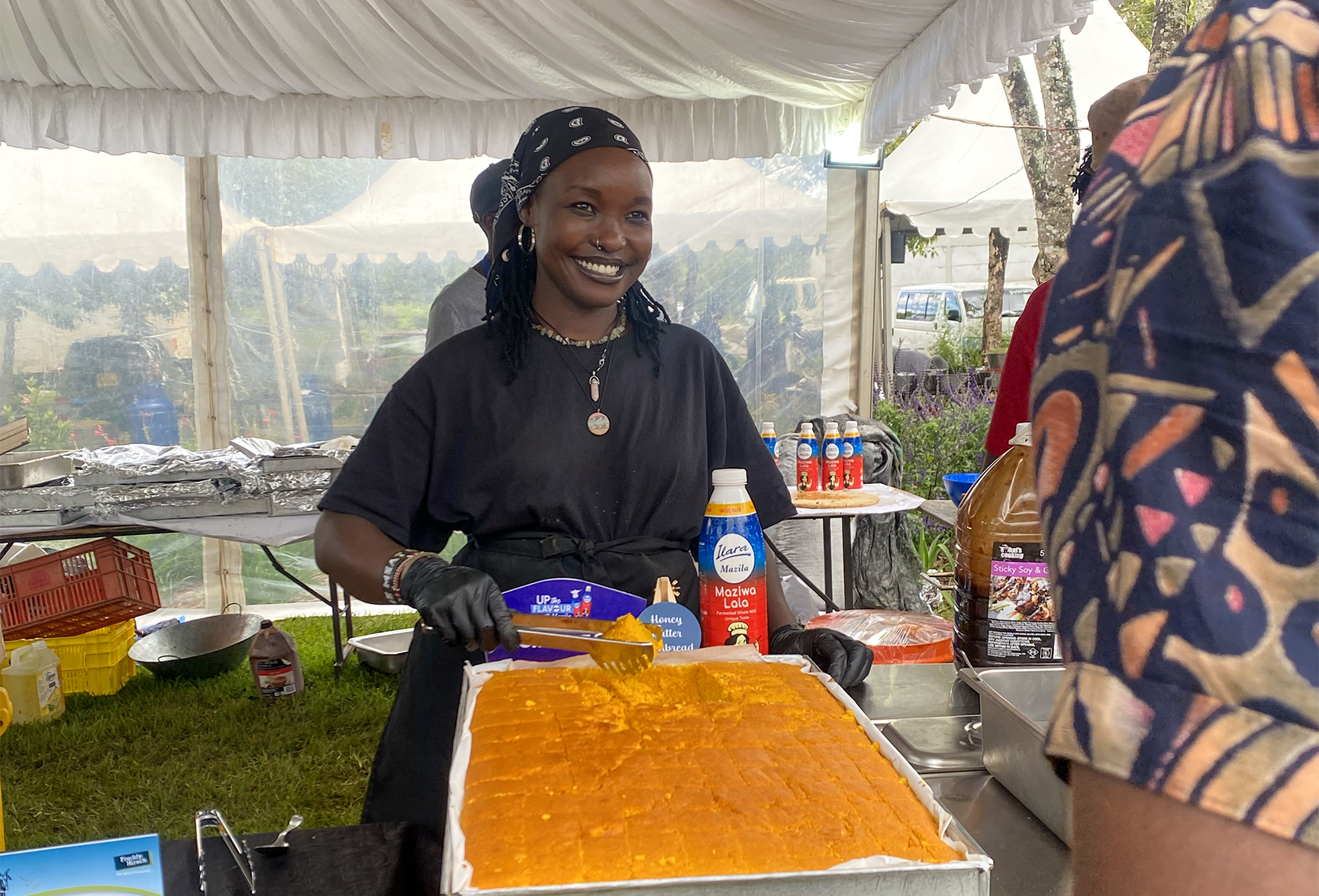
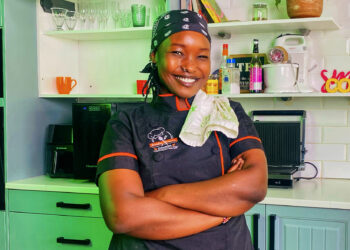
The heavy, sweet scent of marinated chicken sizzling on a barbecue grill signals the start of the MeatUp Fest in Limuru, Kenya. At the centre of a spiral of smoke is 27-year-old Sarah Sandra, known to thousands of her digital followers as “Chef Sandie Burnie.” She moves with practised focus, religiously coating each piece of meat with the precision of someone who knows that in the world of “low and slow” barbecue, patience is the ultimate ingredient.
Sandra isn’t wearing the starched white apron of a high-end kitchen, nor is she waiting for any head chef’s orders. Instead, she is part of a growing community of young African culinary entrepreneurs who are bypassing traditional restaurant structures and leveraging the continent’s booming creator economy to ply their trade. Her journey has seen a passion for fire, smoke and food transformed by a smartphone into a mobile-first career that allows her to balance catering with the rest of her life.
The chef’s interest in food began in Webuye, Western Kenya. After her mother died in 2016, she was raised by her aunt, who ran a small restaurant. The food served at the restaurant sparked her interest in cooking, and by the time she was in primary school, she was already experimenting with her own recipes.
“Cooking became more than just food; it became a way to express myself and share joy with others,” she says. “Seeing people enjoy what I make has always been my biggest inspiration.”
While working in her aunt’s restaurant taught her about the business, it also created tension as her cooking began to attract more customers than the setup could manage. Then, an unexpected pregnancy led to a major life change. When her aunt pressured her to end the pregnancy, Sandra chose to leave and move in with her grandmother.
To support herself, she took various low-paying jobs, including selling clothes and working as a domestic worker. It was her employer at the time who recognised her talent and encouraged her to pursue a career in professional cooking.
“It was through that job that my client made me realise that I had a passion for cooking. That’s when I started to think differently about myself,” she said.
Sandra moved to Nairobi in 2018 to start over, initially selling samosas on the streets. Despite being naturally shy, she says the need to survive pushed her to approach customers. Her persistence paid off; during the COVID-19 pandemic, her sales grew from 50 samosas a day to 400.
With KSh 1,500 (9 US dollars) in savings, she started a small food business and began posting photos of her work on social media. This digital approach allowed her to reach a much larger audience.
While Sandra’s approach and success may be unique, her experience is not unusual in a country where social media is almost ubiquitous for young urban dwellers. And more women chefs are tuning in to the opportunity.
Katana Munyao, a digital marketing professional, noted that young female chefs are becoming more visible in an industry once dominated by older men.
Now you’re seeing young women coming in, and that signals a positive shift. It also shows the impact of training and mentorship within the industry,” Munyao said.
Social media also opened doors to “overland cooking,” a niche but growing industry in East Africa catering to travellers in remote areas.
In August 2021, Sandra took a job in Samburu, in Kenya’s far north, where she had to cook without a standard kitchen.
“It was challenging, but people ate, and they were happy,” she recalls.
She spent two years as an overland chef, travelling across Kenya, Uganda, and Tanzania. She documented these experiences on Instagram, building a community and a business called Chef_sandieburnie, which focuses on meal preps and private catering.
Sandra’s journey shows a major change in how young Africans find work. According to the 2026 Africa Creator Economy Report, the digital creator sector is now worth $3.1 billion. For many, being an online entrepreneur isn’t just a hobby; it is a full-time career in a market where traditional office jobs are hard to find.
Despite her growth, balancing work and motherhood is a constant challenge. In 2024, Sandra decided to leave her overland role to focus on her food brand and spend more time with her daughter.
“Being a private and overland chef takes a lot of time,” she says. “I’ve learned to plan and prioritize. Being a mother has made me more patient, creative, and intentional.”
Her reputation eventually led to a role as a sous chef for Dennis Ombachi, the “Roaming Chef.” She also joined the Kenyan Pitmasters Crew, where she refined her skills in live-fire cooking alongside the country’s top grill masters.
Sandra’s move into the Kenyan Pitmasters Crew signals a change in gender dynamics within the industry. Traditionally, live-fire and barbecue scenes across the continent have been male-dominated. Today, more African women are choosing to work with fire and smoke, moving beyond traditional catering into specialized technical roles.
Chef Red Maina, a veteran pitmaster with 15 years in the business, notes that this shift is becoming more visible.
“In the past two years, I’ve seen a clear increase in young female chefs moving into this space,” Maina says. “It’s not just traditional catering anymore. These are chefs choosing to work with fire and smoke, which hasn’t always been common, said Maina.
She also got a chance to work on major events such as the Meatup Fest: an event that focuses on the “low and slow” method, where pitmasters demonstrate technical skill by cooking premium cuts over wood fire for up to 12 hours.
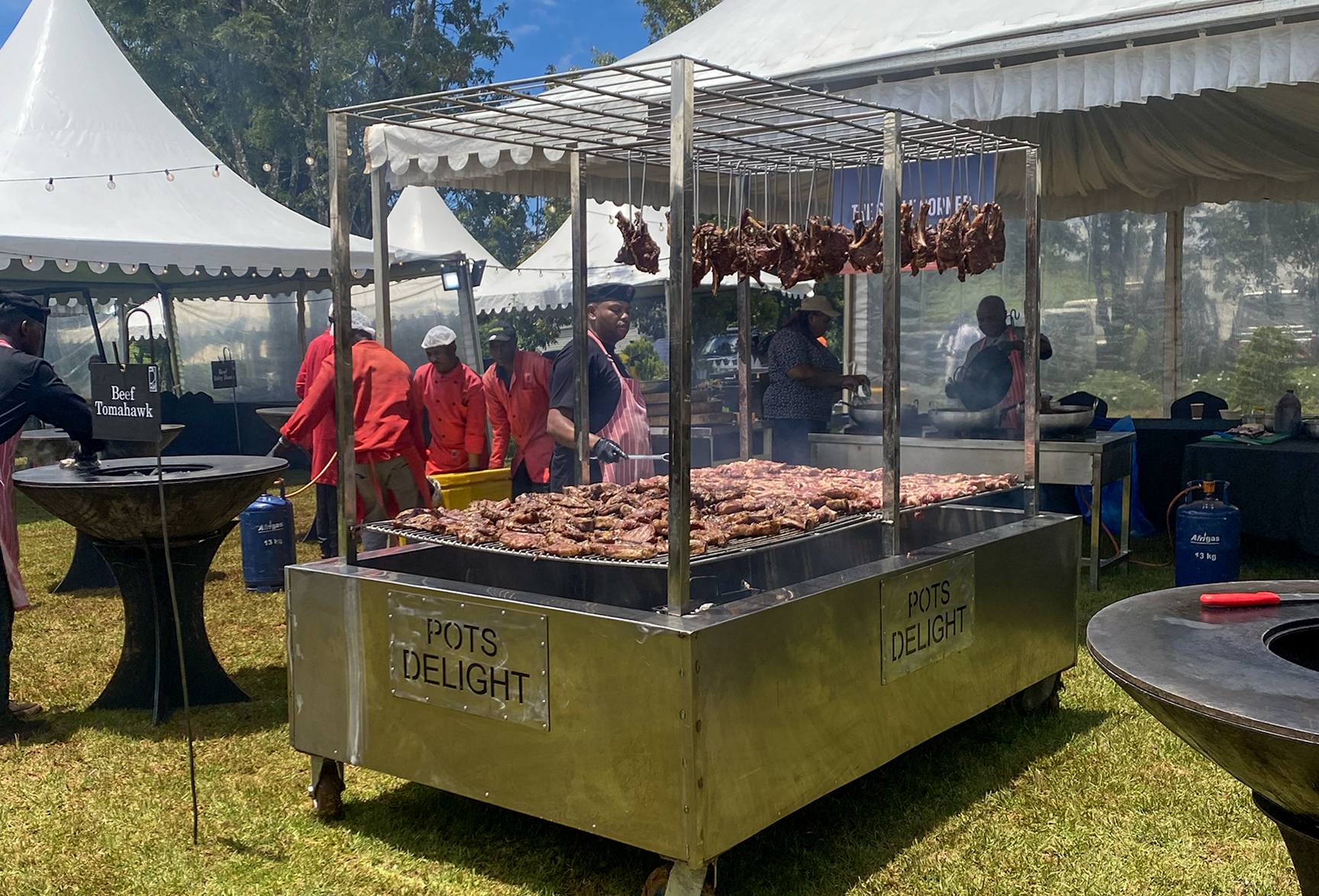
It has become an industry benchmark for craftsmanship, allowing independent chefs to showcase specialized equipment and signature flavours outside of traditional hotel settings.
Sandra is not alone in this digital revolution; she is part of a continental wave of young women transforming African gastronomy through social media. In Nigeria, Hilda Baci (@hildabaci) has become a global symbol of this shift, using her record-breaking “cook-a-thons” to build a massive digital academy that trains thousands of aspiring chefs online.
Similarly, in South Africa, Mogau Seshoene, known as The Lazy Makoti (@thelazymakoti), has turned a simple Instagram page into a bestselling cookbook empire and a homeware line.
Like Sandra, these women have bypassed traditional hotel kitchens, proving that a smartphone and a unique culinary voice are the new tools for building a multi-million-dollar African brand.
Sandra now plans to open a permanent space that will serve as both a kitchen and a studio for content creation.
“I want a place where I can cook, experiment, and create content in one space,” she says. “More than anything, I want to inspire others.”
— bird story agency