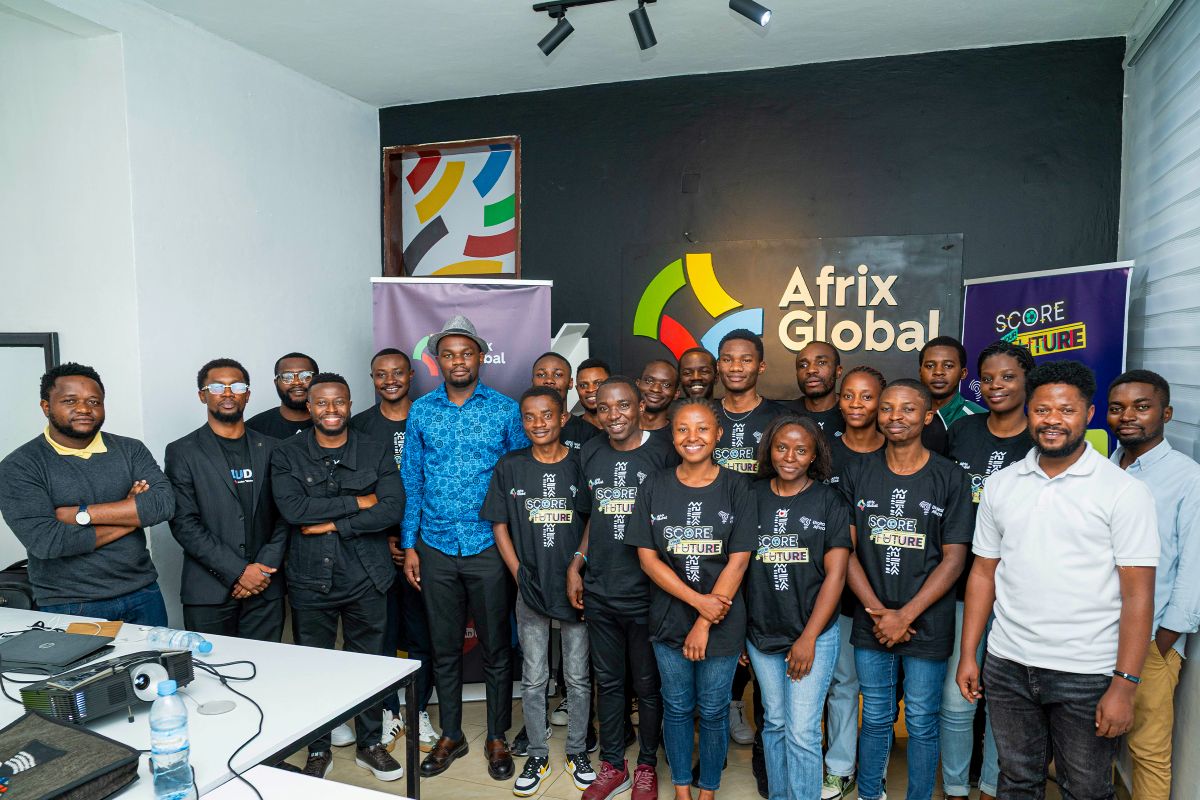
In Goma, a city located between Lake Kivu and the Nyiragongo volcano in the eastern Democratic Republic of Congo, an ambitious program has launched operations to give young people access to digital skills education that could boost their employability.
Supported by Digital Africa, Talent 4 Startups operates across Africa, relying on local implementation partners, including training centres, technology hubs, and digital companies, which adapt the program to national and local realities. In Goma, it’s carrying out its mission through a collaboration with Afrix Global, a technology and training company committed to empowering young people through its guiding principle: “We train, We create, We connect.”
The program plugs young people into startup ecosystems and job opportunities in the digital economy. The initiative focuses on market-oriented training, hands-on learning, and strong links between talent and employers. Goma poses a particular set of risks as an active conflict-zone.
“Goma is a city of challenges, but also of immense potential. We believe that development should not wait until all conditions are perfect. Where the difficulties are greatest, the need for opportunity is even greater,” said Prud Zihalirwa, founder of Afrix Global.
For Zihalirwa, implementing Talent 4 Startups in Goma means investing in local human capital and transforming the energy of youth into productive and employable skills.
Participants work on real projects, use industry-standard technologies, and develop problem-solving and collaboration skills tailored to startup environments. But training is only the first step.
“We don’t just train,” explained Zihalirwa. “We help young people create websites, platforms, digital campaigns, and sometimes their own entrepreneurial projects. And we connect them to startups, mentors, companies, and professional opportunities, both locally and remotely.”
This emphasis on connection addresses a major weakness of many training programs: graduates often leave with knowledge, but without real pathways to employment.
The Talent 4 Startups program also welcomes young female entrepreneurs. Before joining the program, Reine Mukelya volunteered at a local organization, an experience that strengthened her interest in entrepreneurship. At the same time, she is developing her own fashion brand, Crown Collection. Her expectations were clear: to strengthen her digital communication skills, learn how to better promote her products online, and expand her professional network.
Mukelya says she has acquired practical skills in video editing, creating visuals with Canva, and planning and implementing advertising campaigns. She is directly applying these lessons to professionalize Crown Collection’s communication, attract more customers, and strengthen its digital presence.
She acknowledges that, as a young woman in Goma, it remains a challenge to thrive in the digital world, particularly due to stereotypes, limited visibility, and limited access to resources. However, Talent 4 Startups has enabled her to build her confidence and feel fully legitimate in this ecosystem.
Today, Mukelya says she is stronger, more competent, and determined to inspire other young women to pursue careers in digital technology.
For Alex, a web development learner, Talent 4 Startups has brought structure to a long-standing passion.
“I chose web development because I deeply believe that digital technology can offer concrete and sustainable solutions to the problems facing my community,” he explains. “Through digital solutions, I can contribute to change and create a positive impact.”
Alex joined Talent 4 Startups because the program offered a safe, structured, and scalable environment to build a career in tech. The training allowed him to develop comprehensive web development skills, from UI/UX design to technical implementation, choosing technologies based on project needs. He now works with HTML, CSS, Tailwind CSS, JavaScript, React, and Next.js, and considers JavaScript and its ecosystem among the most in-demand skills on the job market. Beyond technical skills, the training replicates the real conditions of startups: teamwork, meeting deadlines, adaptability, and problem-solving.
“Today, I feel much more employable,” says Alex. “Not only because of my technical skills, but also because the program has boosted my confidence, my ability to work in a team, and my professional mindset.”
In the medium term, he plans to work remotely while gradually developing his own digital solutions to address the challenges faced by African communities.
Afrix Global evaluates the program’s impact using concrete indicators: professional integration, freelance assignments, integration into startups, income generation, and participants’ ability to manage digital projects independently. The paths of former learners are tracked in order to understand the long-term effects.
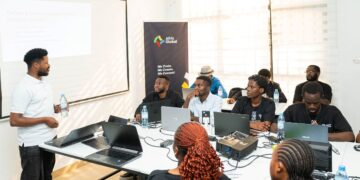
Significant challenges remain, such as unstable internet connections, limited access to equipment, and a still-developing local digital market. However, these constraints have pushed Afrix Global to adapt, develop content accessible offline, and expand access to remote and international opportunities.
“Digital skills training is an essential part of the solution, but it cannot work alone,” explains Zihalirwa. “For large-scale impact, it must be combined with support for startups, access to financing, infrastructure improvements, and the development of a strong digital ecosystem.”
Nevertheless, in fragile regions such as eastern DRC, digital skills open doors to local employment, remote work, entrepreneurship, and global markets — opportunities previously inaccessible to many young people.
Through Talent 4 Startups, Afrix Global is helping to transform the narrative around youth and opportunities in Goma, shifting the focus from waiting for stability to building capacity despite uncertainty.
“We believe that Africa’s future will be built through education, technology, and the boldness of its youth,” Zihalirwa concludes. “Even in difficult contexts, investing in skills is investing in stability, innovation, and hope.”
— bird story agency